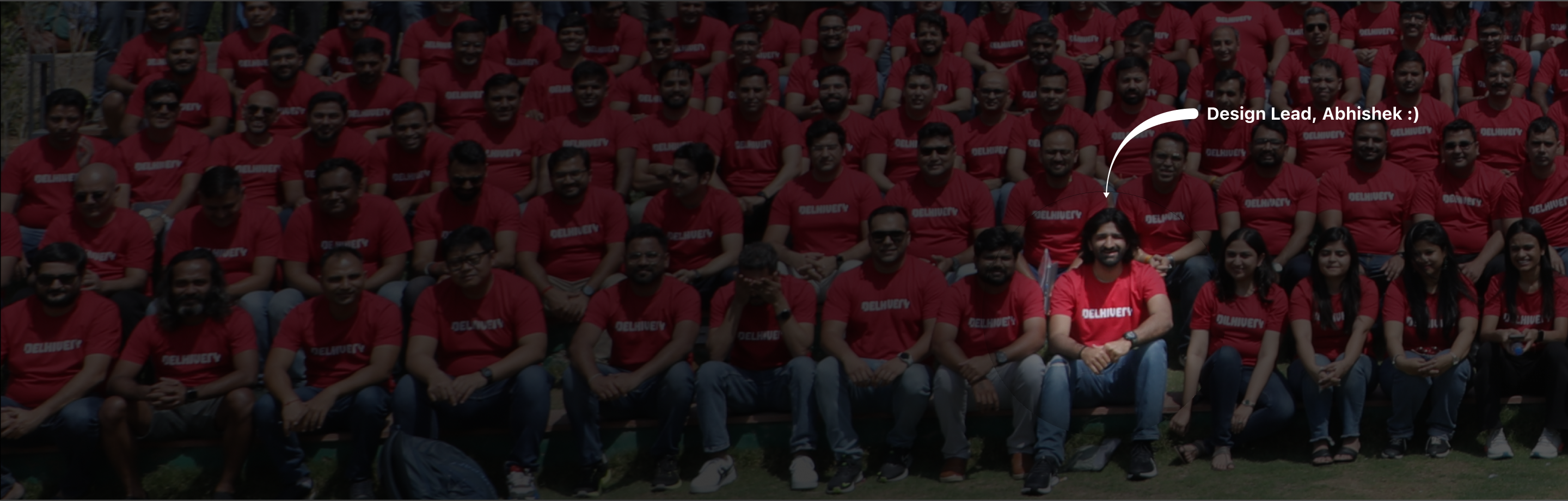
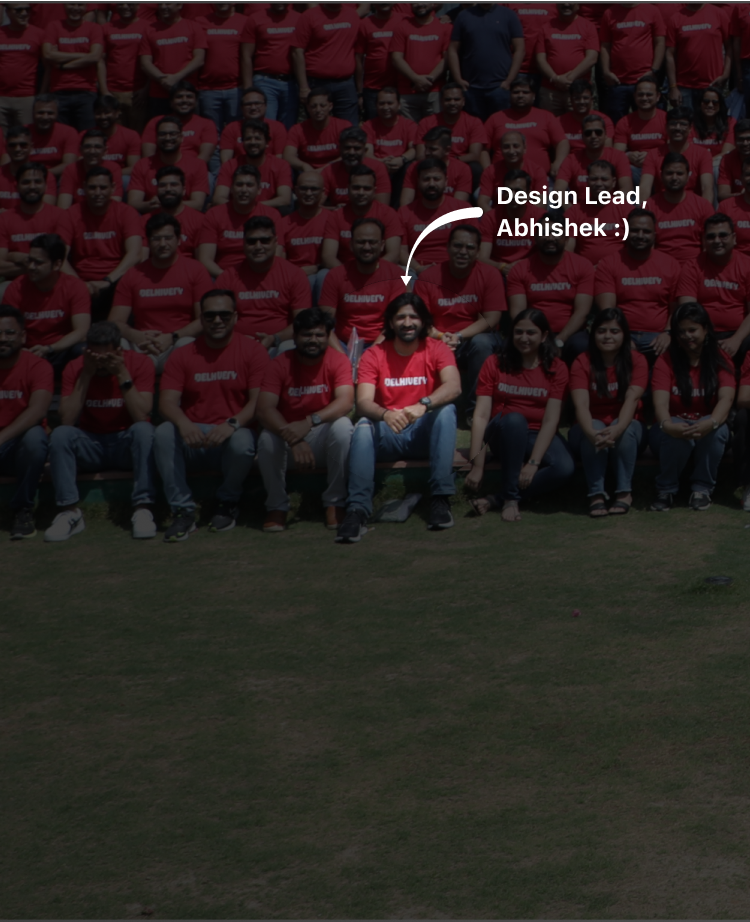


Lead product design for the Transportation (Express) and SCS (WMS) verticals, managing a team of 7 designers to deliver UX solutions used daily by field execs, partners, and ops teams.
Design Buddies:
Abhishek, Ravi, Jaya, Pallavi, Mehak, Nishant
Product Peeps:
Nikhil, Vikas, Piyush I, Kalpana, Sourajit, Subham, Ruchika,
Piyush II, Nilesh many more
FE App:
Oct 2023 - Feb 2024
Partner App:
Oct 2023 - Feb 2024
LM Eye Iteration I:
Sept 2024 - Oct 2024
LM Eye Iteration II:
Nov 2024 - Feb 2025
The Last Mile is where everything comes together - it’s the most visible, critical part of the delivery journey. It directly shapes customer experience of the brand and operational success.
As Design Lead, I led the UX transformation of this fast-moving, high-impact layer of the business. We reimagined core tools and workflows across the Last Mile - covering task allocation through the LM Dispatch Dashboard, daily delivery operations via the FE App, new partner onboarding with the Partner App and engagement through gamification initiatives. Our goal was to improve efficiency, reduce friction, and build systems that could scale with speed and confidence.
This case study offers a closer look at how design played a key role in enabling real-time control, operational visibility, and scalable performance within Delhivery’s ₹8000+ Cr Express ecosystem.
Delhivery is India’s leading logistics and supply chain company, offering tech-driven solutions across parcel delivery, warehousing, freight, and cross-border services. Since 2011, it has enabled commerce at scale - serving 18,000+ pin codes and delivering over 2 billion parcels nationwide.
Express - Last Mile
This Case Study focuses on the most visible and fast-paced layer of Delhivery Express, the Last Mile: where UX drove faster deliveries, smoother dispatch, and better visibility across teams.
The final step where deliveries happen and every second counts. Below are the key systems we redesigned:
- FE App 2.0: Redesigned for faster deliveries with clearer task flows, route guidance and fewer errors.
- Partner App 2.0: Improved onboarding, payout visibility, and delivery tracking for third-party agents.
- New Digital Payment 2.0: Shifted from cash to QR-based payments to boost speed and reduce COD friction.
- Delhivery Premier League: Gamified performance metrics to drive delivery partner engagement.
- LM Eye Dashboard: Real-time parcel-level tracking and control for distribution center teams.
- LM Dispatch (ODX): Smarter trip planning and automated route assignment for daily dispatch ops.

Last Mile Systems
Last Mile is fast-paced, high-volume and complex - requiring tools that are simple, scalable, and reliable. Through field visits, user interviews, and system audits, we uncovered critical gaps across our core delivery systems that impacted both operations and experience.
Delivery agents struggled with unclear flows, outdated UI, and missing features - slowing down their day and reducing efficiency. Poor route visibility and app errors directly impacted delivery success and field morale.
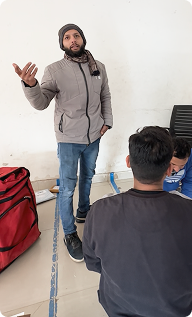
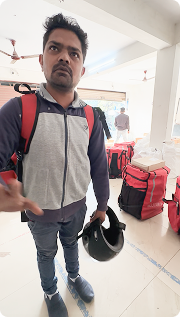
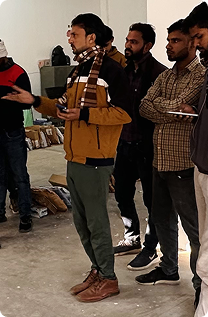
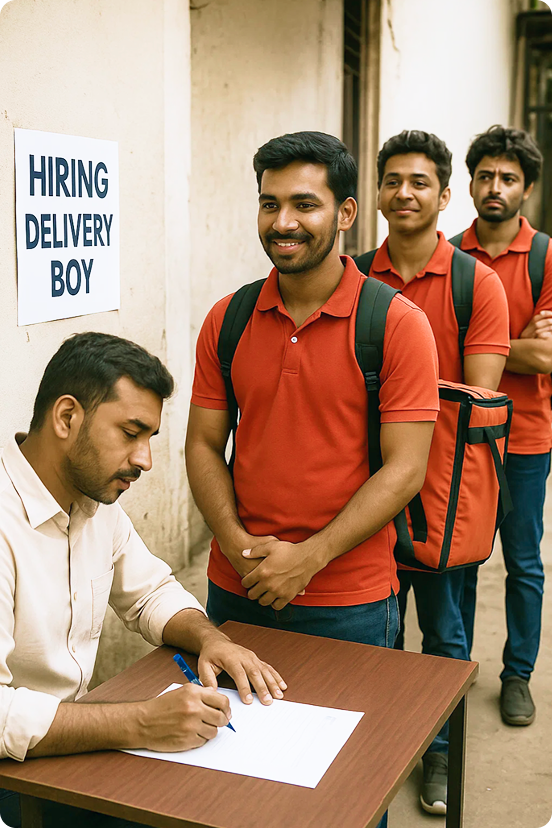
Onboarding was manual, slow and error-prone, causing partner drop-offs and delays in activation. Without a self-serve option, scale and speed were impossible.

Heavy reliance on cash created risks and inefficiencies. The digital payment flow was hidden, unclear, and failed often, hurting both rider safety and customer convenience.
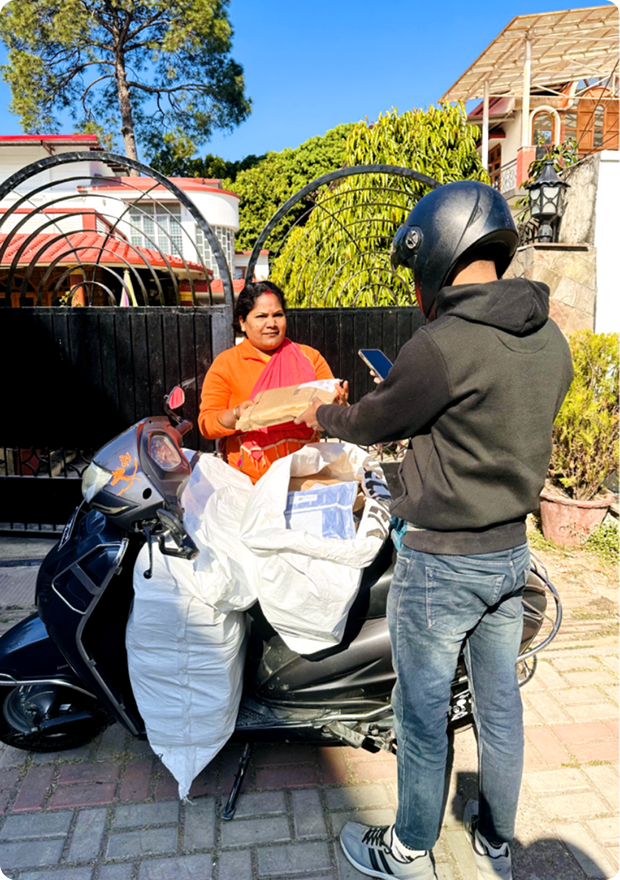
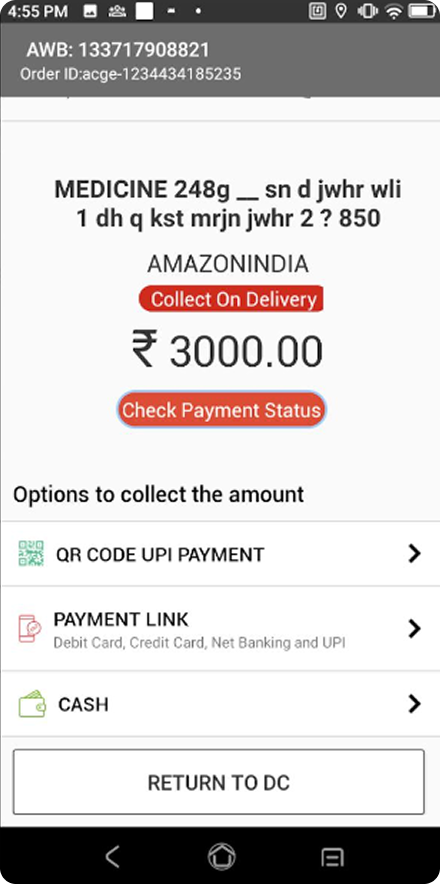
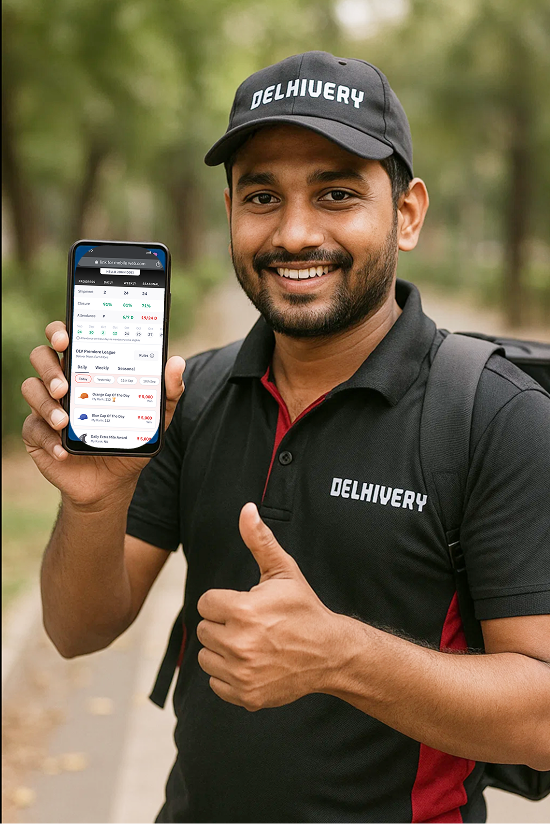
FEs lacked engagement and motivation beyond payouts. There was no system to reward performance or build a sense of progress and recognition.

DC teams couldn’t use the dashboard effectively due to unclear flows and limited visibility. Feature awareness was low, and ops teams couldn’t act quickly when issues occurred.
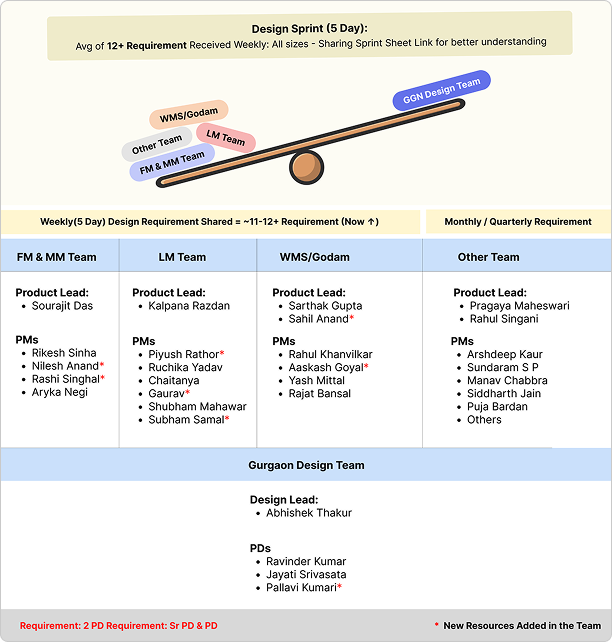
Solving user problems wasn’t the only hurdle for the design team, we also faced significant challenges within our own design process & execution. Here’s what we navigated:
- No central intake process: Designers were pulled in by PMs without context or timelines, leading to confusion and burnout.
- Unclear priorities: With a 12:2 PM to designer ratio, the team was constantly reacting to requests instead of planning work.
- Lack of visibility: Designers didn’t know what was coming next or how to structure their week.
- Blocked sprint planning: Our initial attempt to set up a design sprint rhythm was delayed due to internal pushback.
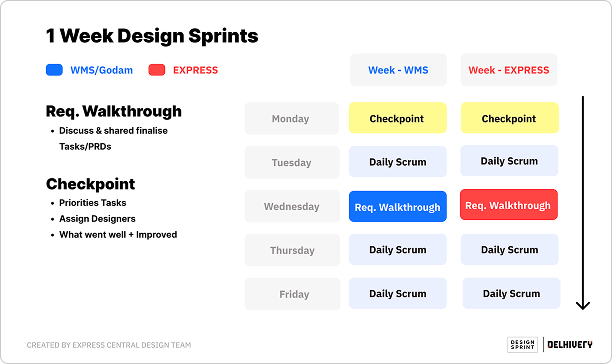
- Tight delivery windows: We often had just 5 working days to gather requirements and deliver complete designs #OneWeekDesignSprint.
To bring structure, I introduced a weekly Design Sprint every Wednesday, where all relevant PMs were invited to share upcoming tasks and align on priorities.
- Created task visibility for designers
- Improved delivery quality and planning
- Reduced last-minute chaos and stress
- Increased design output and clarity by almost 2×
Fast, Field-First and Scalable
As part of the DS 2.0 redesign, we focused on enhancing product discovery, engagement, and decision-making across key touch points

Before diving into wireframes and dashboards, we started where it matters most, on the ground.
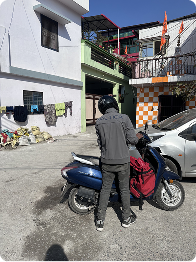
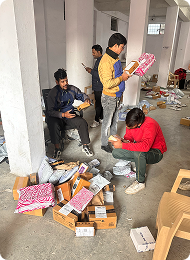
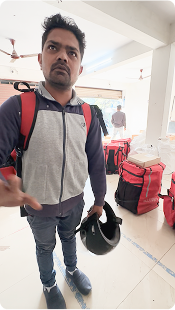
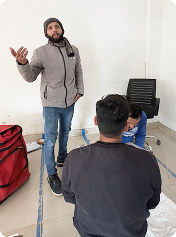
- To understand LM challenges, I shadowed FEs at dispatch centers and even delivered parcels myself.
- These experiences were eye-opening. From scanning parcels, handling app glitches, chasing unclear addresses, to interacting with customers on the go, we felt the friction firsthand.
- This field immersion built empathy with FEs, TLs, DC managers and partners - shaping a design approach rooted in real operations.
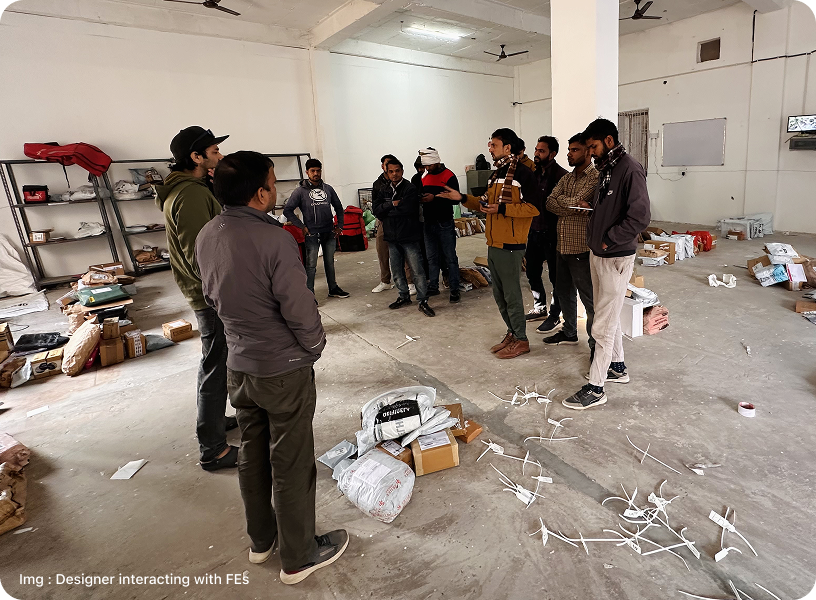
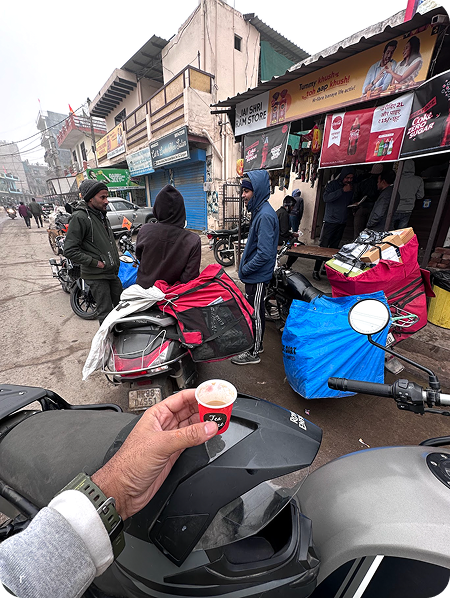
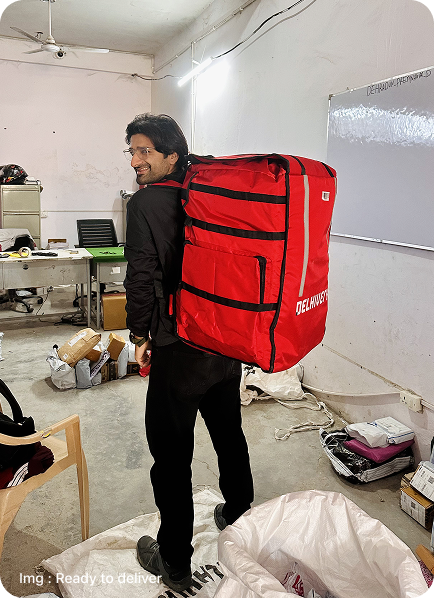
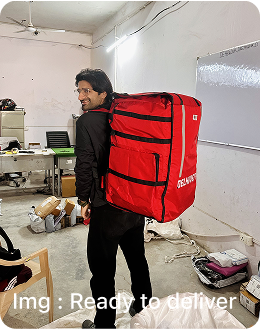
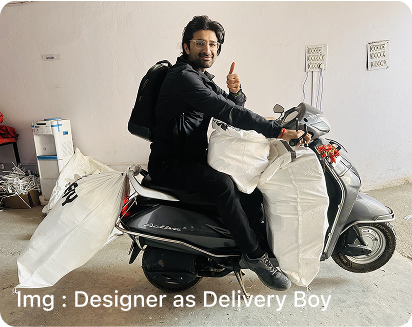
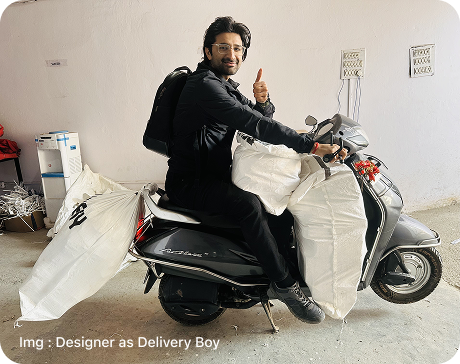
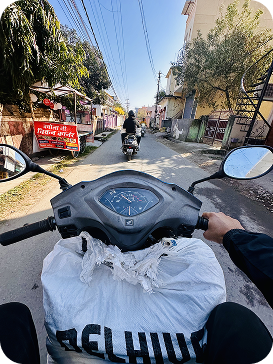
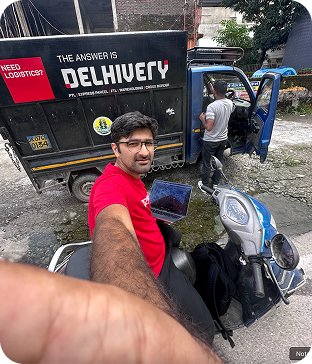
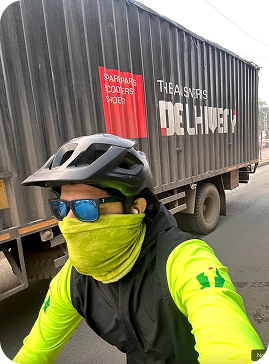
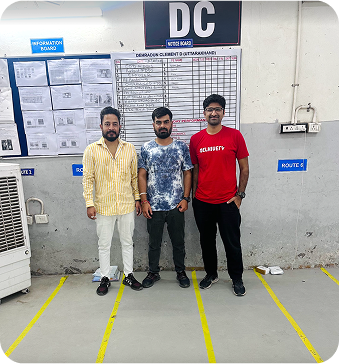
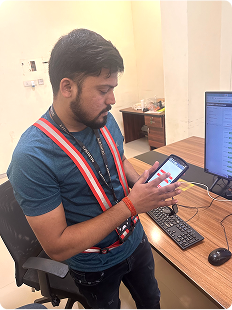
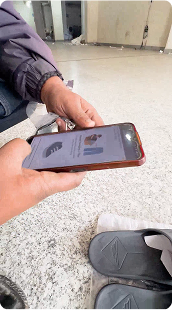
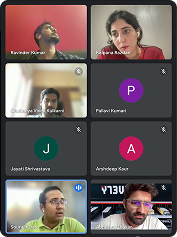
To understand the real-world pain points in Last Mile operations, we used a mix of immersive and collaborative research methods, which I’ve already shown above. Our goal was to observe, empathize and validate from field visits to feedback loops.
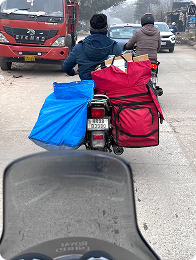
We shadowed FE and delivery partners during live runs to capture real-time pain points from scanning parcels under time pressure to navigating broken flows on the app. This helped us move beyond assumptions and build with true on - ground empathy.
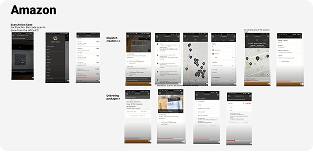
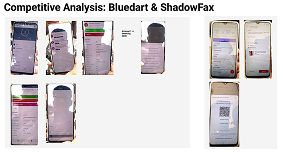
To better understand industry standards and identify UX gaps, we conducted a benchmarking study of key logistics and delivery apps, including Amazon, Blue Dart, Shadowfax, and others.
- Task Flows: Clarity in pickup/delivery steps
- Route Visibility: Navigation guidance and updates
- Communication: Consignee contact and status messaging
- Payments: Digital options and confirmation UX
- Performance Tracking: How agents track targets, payouts, and progress
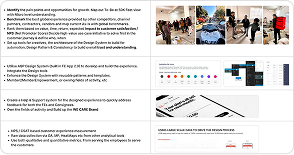
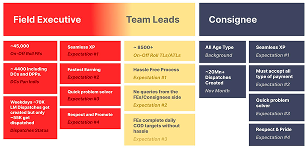
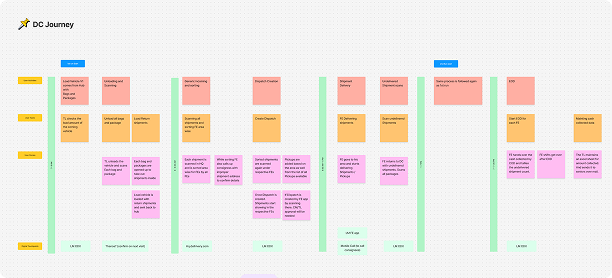
Using insights from the field and stakeholders, we mapped end to end journeys for FEs and partners highlighting where delays, confusion, or handoff failures occurred. These maps formed the foundation for our redesigns.
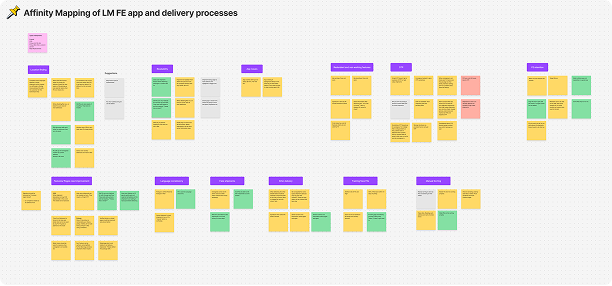
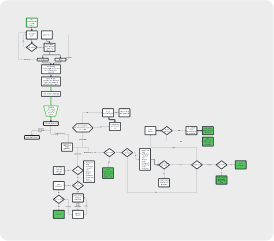
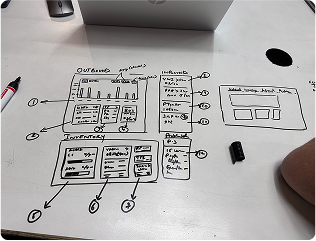
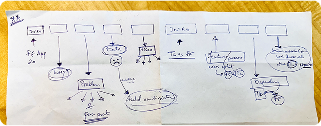
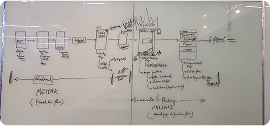
We conducted interviews with DC managers, TLs, and PMs to understand operational gaps, team frustrations, and backend complexities that impact delivery performance. These conversations helped shape both internal tools and user-facing flows.
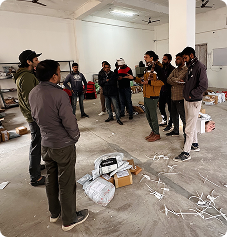
Uncovering real gaps across our core delivery tools, what slowed us down, confused users, or blocked scale.
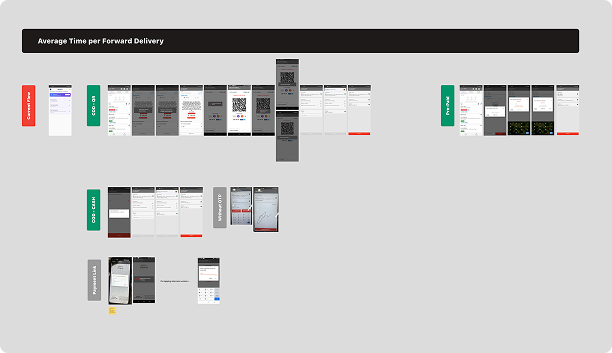
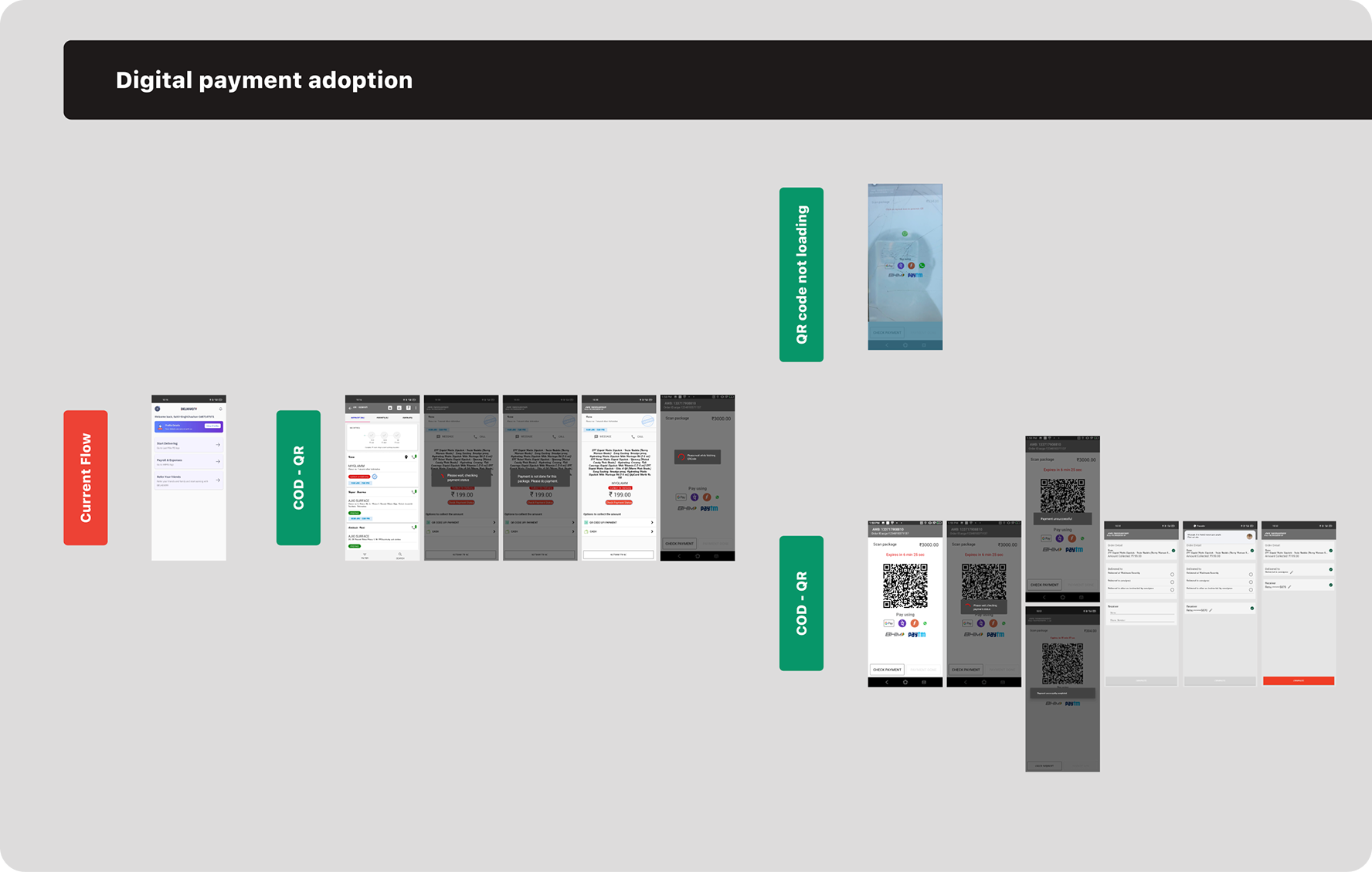
- QR codes often failed in low-network areas
- Manual handling of pickups and routes added friction
- No in-app support or escalation follows
- Language barriers slowed down onboarding
- No way to gather delivery feedback from consignees
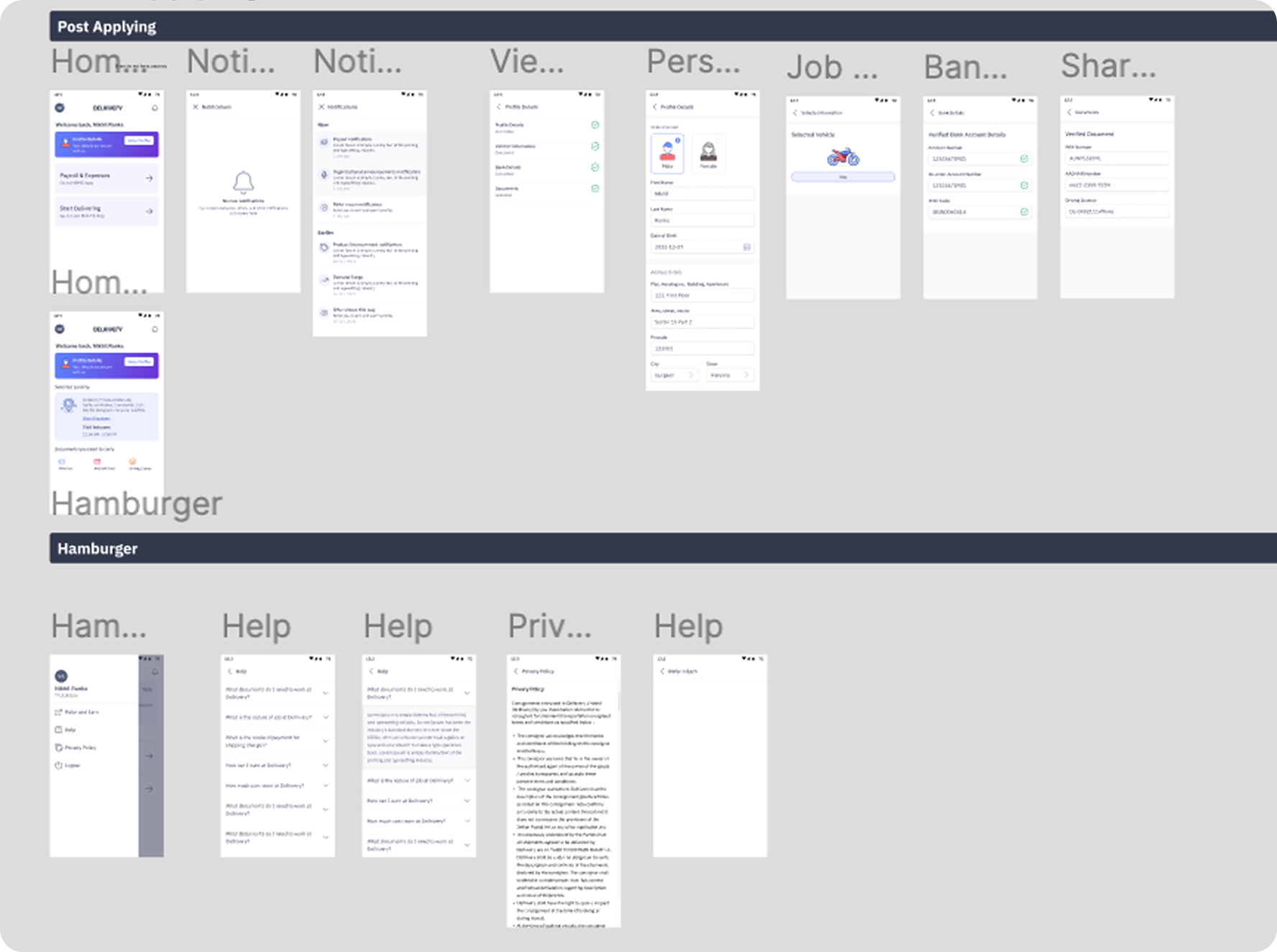
- Manual data entry led to frequent errors
- Riders couldn’t start earning immediately
- Network issues caused QR failures
- Payment flow had too many options, confusing new FEs
- Few people used QR despite company push.
- FEs had low motivation beyond basic payouts.
- No clear way to track or reward good performance.
- Hard to scale recognition for consistent performers.
- Needed a fun system to boost morale and drive results.
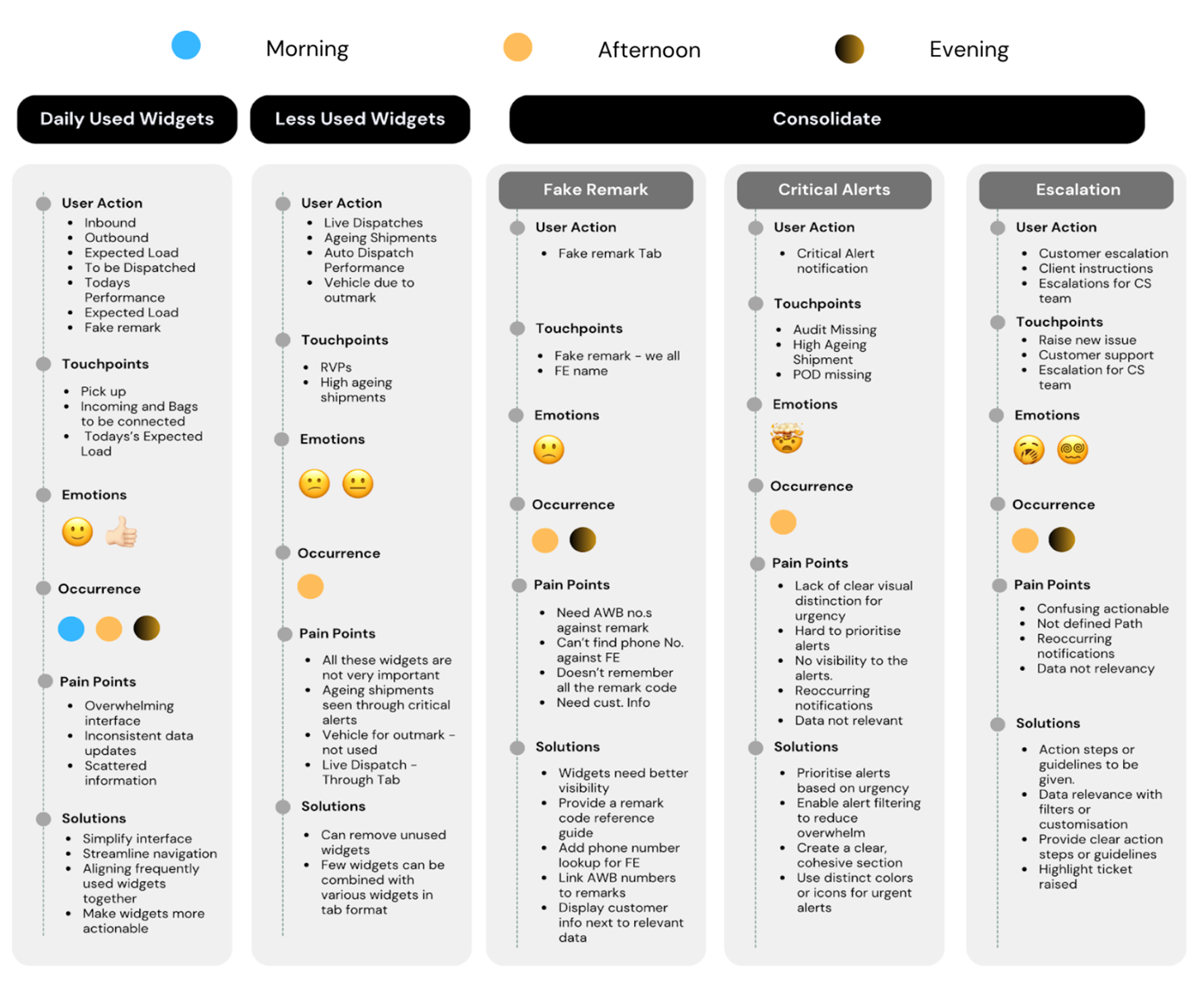
- Many Ops users weren’t aware of all dashboard features.
- Inconsistent usage patterns across DCs revealed training and design gaps.
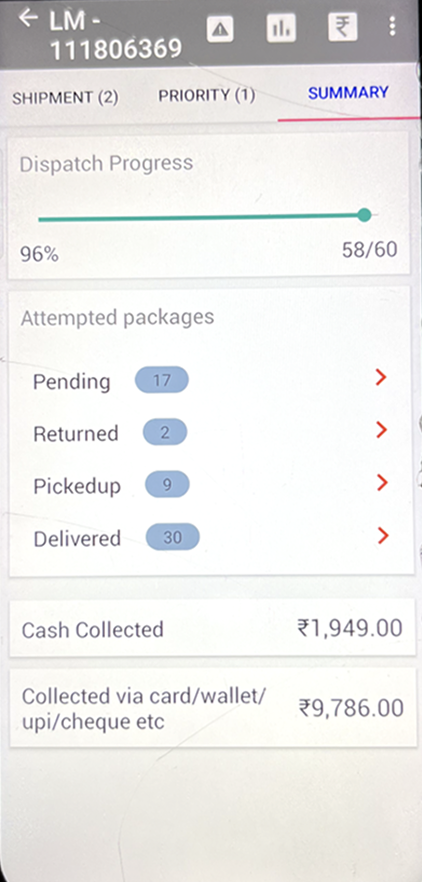
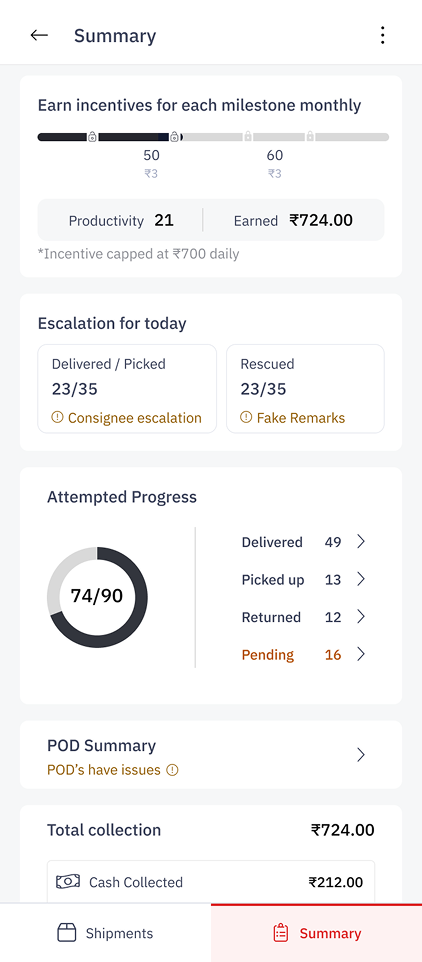
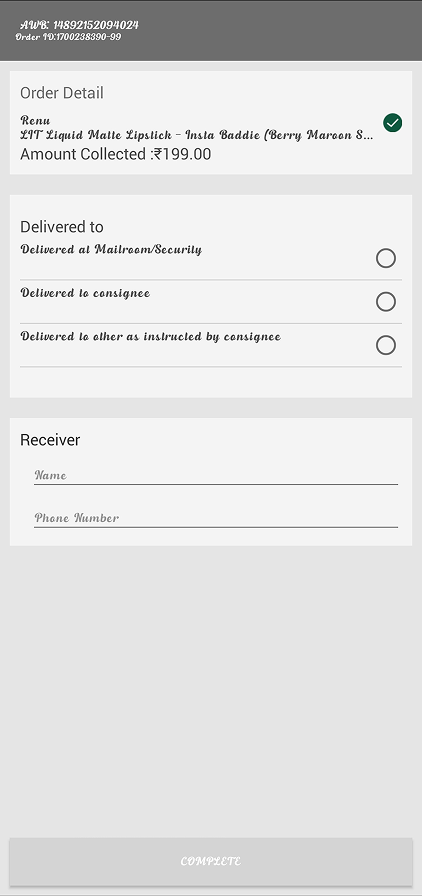
From cluttered flows and manual workarounds to streamlined, field-ready tools: here’s a glimpse of the design transformation across our key Last Mile systems. Shown below are select screens from FE App, Partner App, Digital Payments, DPL, and the DC Dashboard. Some details are blurred for confidentiality.
-
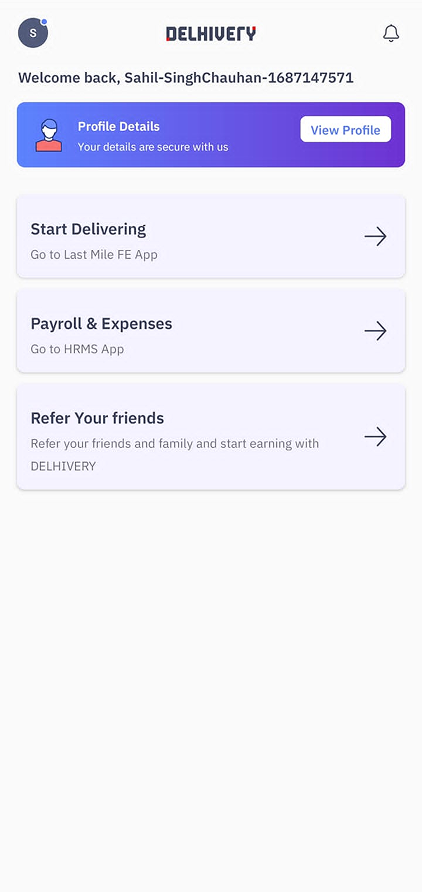
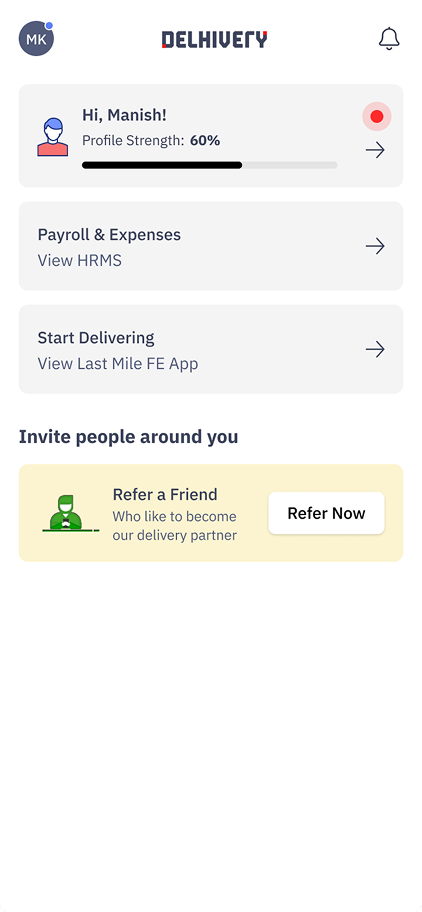
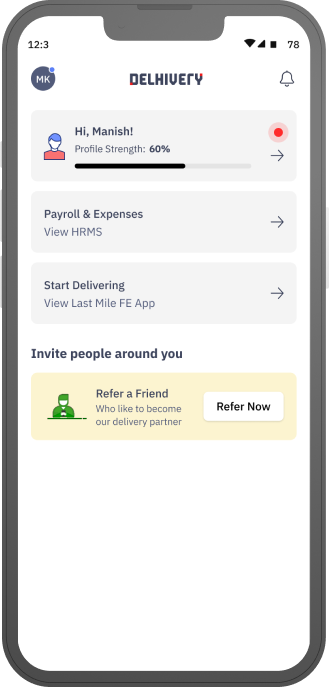
Brand Alignment: Transitioned from an
outdated blue theme to Delhivery’s brand-aligned black and
red palette, enhancing visual consistency across the
platform.
-
Content Clarity: Reduced visual clutter and
removed unnecessary jargon to improve first-glance
clarity.
-
Onboarding Nudges: Introduced “Profile
Strength” nudges to guide FEs in completing their onboarding
and documentation - improving engagement and compliance.
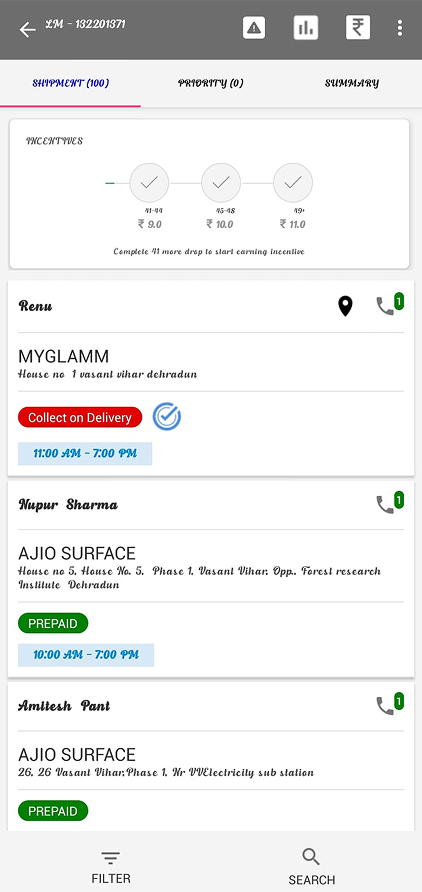
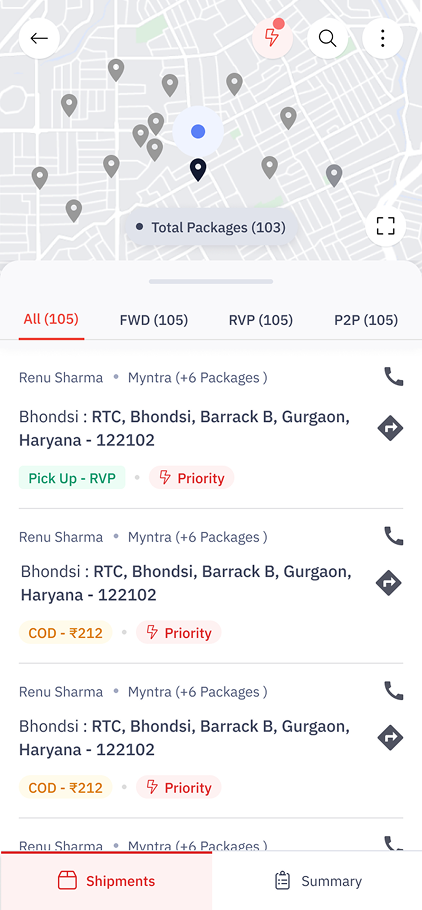
- UI Cleanup: Cleaned up the UI for smoother navigation and simplified interaction points, focusing more on minor visual overhauls than deep UX restructuring.

- UX Principles: Applied core UX principles: complexity reduction, proximity, and F/Z gaze patterns to simplify the interface.
- Visual Simplification: Removed unnecessary dividers, colors, shadows, and non-functional UI components.
- Map Integration: Introduced a map view for better spatial understanding of shipments—replacing manual address checks card by card.
- Thumb Reachability: Moved important tabs (Shipment, Summary) to bottom nav for thumb-reachability, considering on-field ergonomics of FEs.
- Info Prioritization: Reorganized shipment info to prioritize what matters most (e.g., urgent deliveries, nearby stops).
- Interactive Zones: Removed non-functional icons and improved interactive zones (e.g., clearer calls, navigation CTAs).
-
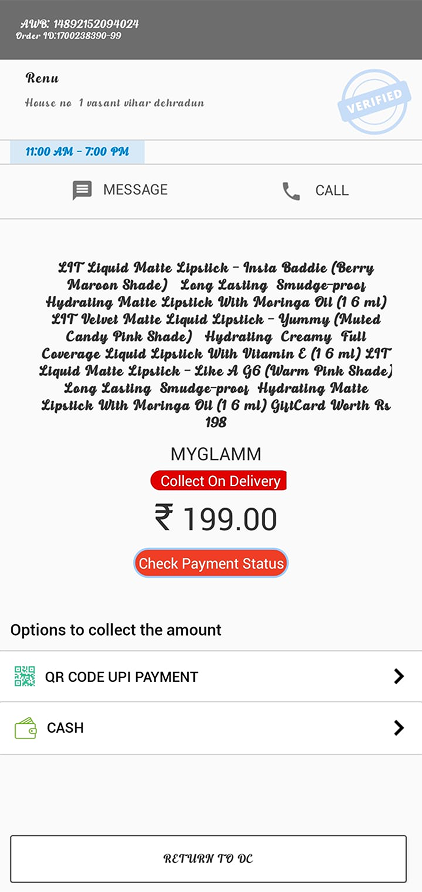
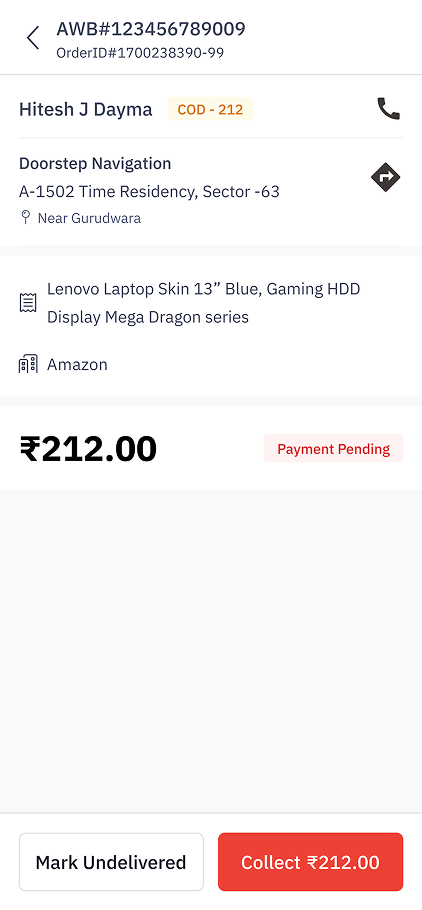
Content Grouping: Grouped similar info
(consignee details, client info, etc.) using proximity for
quicker comprehension.
-
Visual Cleanup: Used clean, flat design to
eliminate visual noise - removed shadows, borders, and
redundant text areas.
-
Navigation Fix: Introduced clear back
navigation, solving the previous issue where FEs restarted
the app due to dead-ends.
- CTA Enhancement: Focused CTA placement and color contrast improvements for on-the-go usab
-
Design Upgrade: Upgraded visuals with
Delhivery’s Aquarius Prime design system.
-
Motivation Focus: Reordered sections to
show incentives and productivity first, motivating FEs
through visibility into earnings.
-
Content Hierarchy: Clearly differentiated
primary info (e.g., earnings, escalations) from secondary
(e.g., delivery attempts).
- Visual Structure: Enhanced visual hierarchy with better spacing, alignment, and iconography.
-
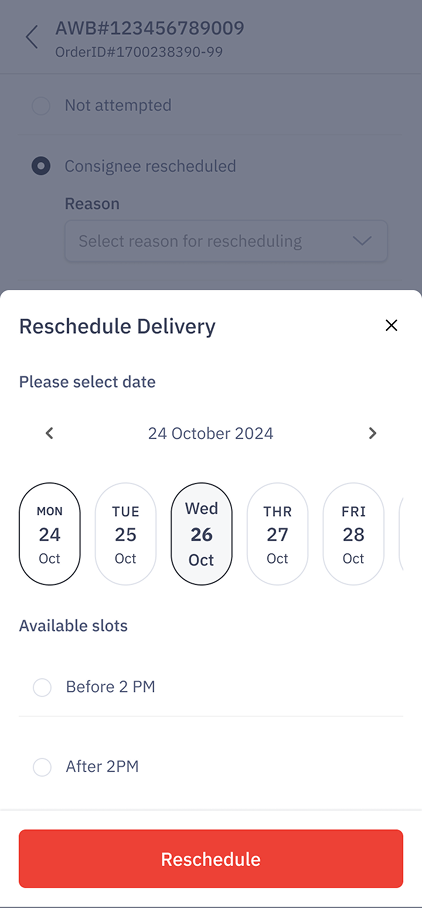
Rescheduling Option: Introduced a
rescheduling option to reduce false NSL (Not at Location)
tags by FEs.
-
Error Reduction: This reduced manual
verifications by TLs and prevented unnecessary returns.
- Delivery Prioritization: Allowed FEs to assign lower priority to deliveries for the day—ensuring the right orders are picked up later without loss.
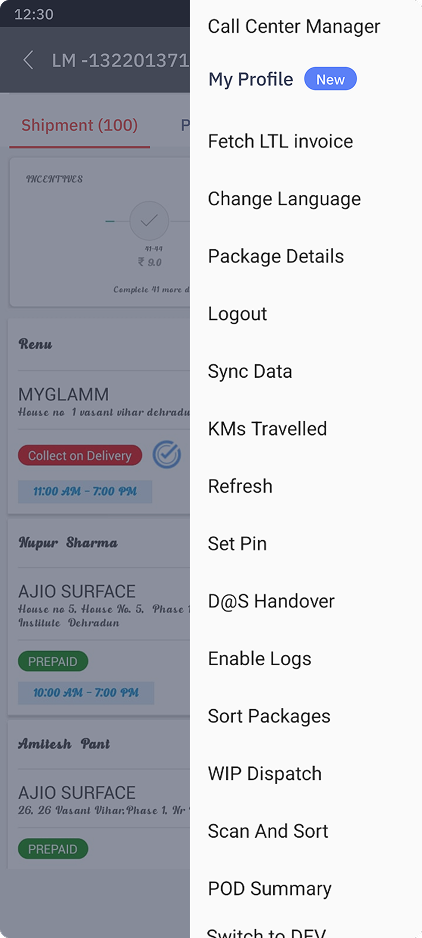
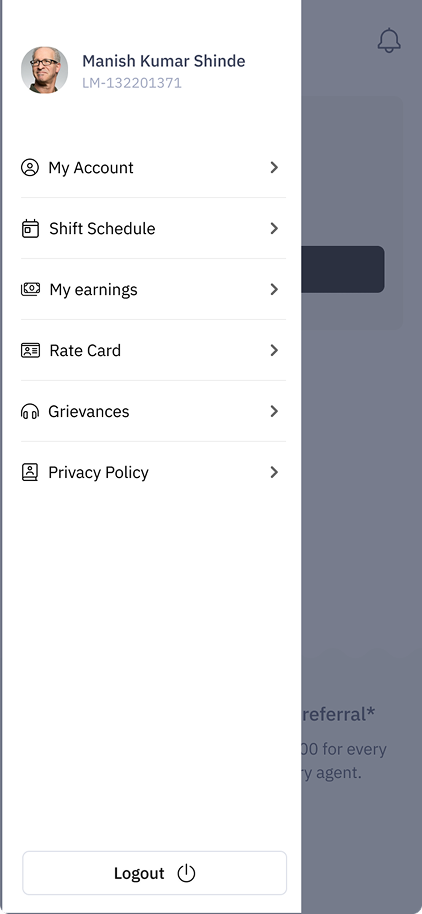
-
Menu Simplification: Simplified and
decluttered the entire menu system.
-
Redundancy Removal: Removed repetitive and
nested items that previously created confusion.
- Logical Grouping: Consolidated options into clear, distinct categories with consistent placement.
-
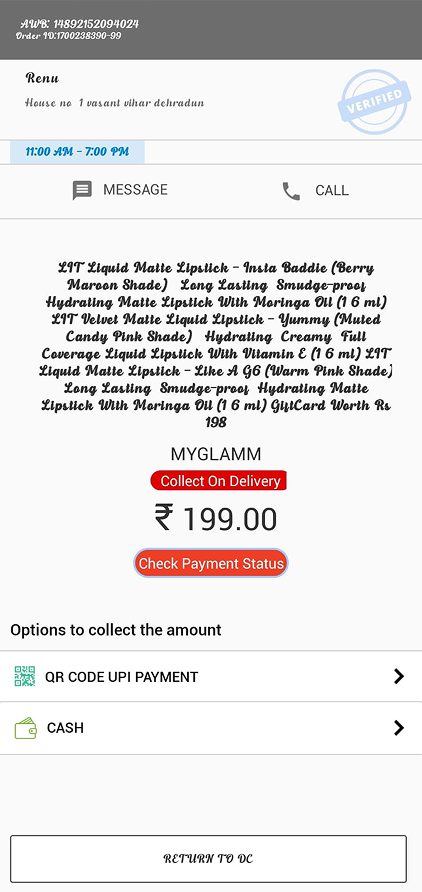
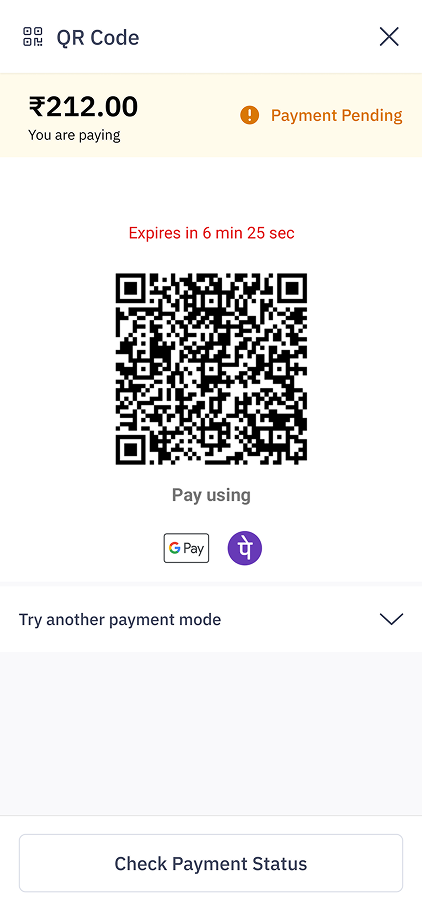
Default QR: Set QR payments as the default
method to increase adoption and minimize cash handling.
-
Screen Redesign: Redesigned payment screen
to ensure the QR code is always visible - removing
scroll-based confusion.
-
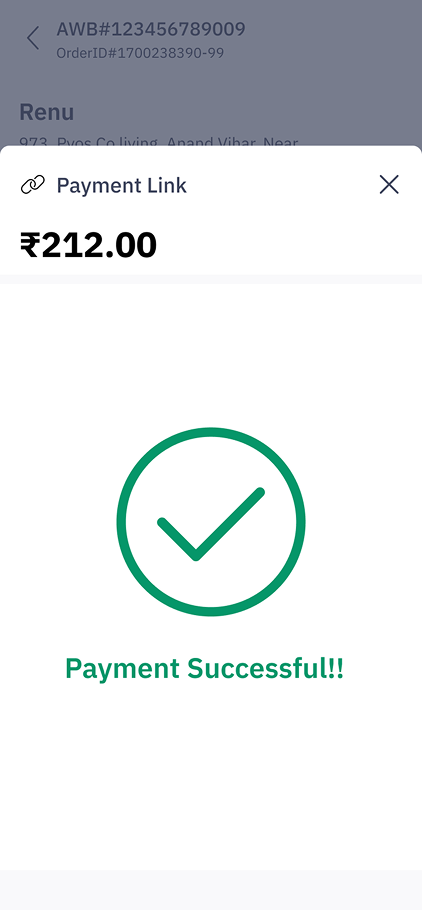
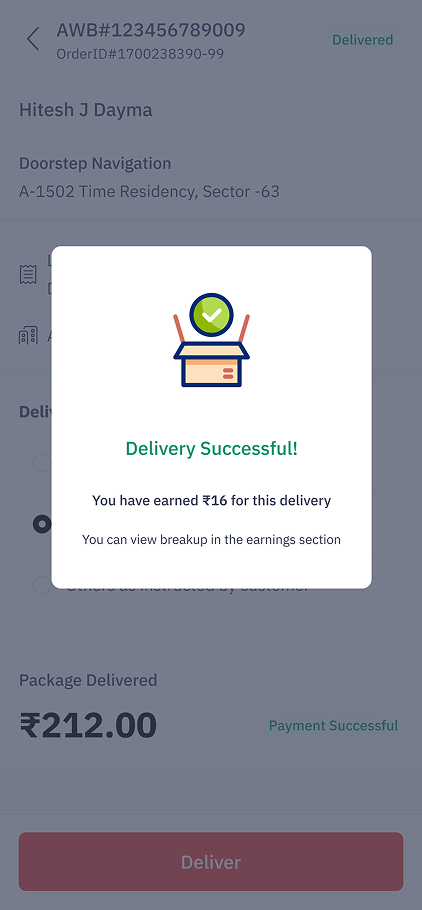
Feedback Mechanism: Added visual feedback
for successful payments and fallback options for failed
transactions.
-
Proof Flow: Introduced proof collection
flows (e.g., image capture for failed receipts).
-
Cash Friction: Added friction for selecting
"Cash" - nudging users toward digital payments.
- Business Impact: QR adoption increased from ~21% to ~32%, saving ~₹2.5L/day in cash handling.
-
Default QR: Set QR payments as the default
method to increase adoption and minimize cash handling.
-
Screen Redesign: Redesigned payment screen
to ensure the QR code is always visible - removing
scroll-based confusion.
-
Feedback Mechanism: Added visual feedback
for successful payments and fallback options for failed
transactions.
-
Proof Flow: Introduced proof collection
flows (e.g., image capture for failed receipts).
-
Cash Friction: Added friction for selecting
"Cash" - nudging users toward digital payments.
- Business Impact: QR adoption increased from ~21% to ~32%, saving ~₹2.5L/day in cash handling.
-
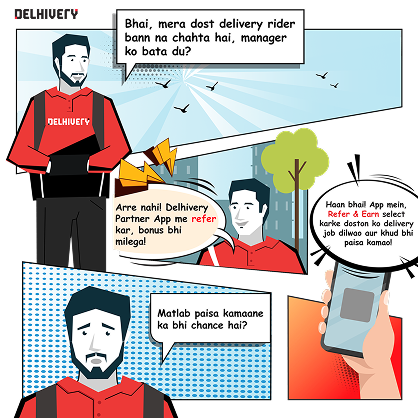
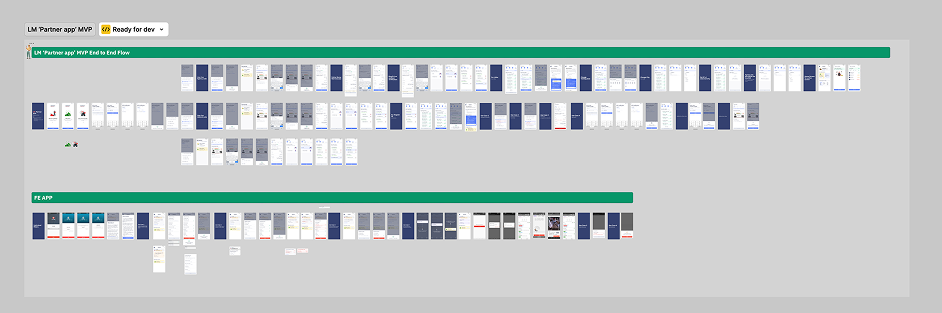
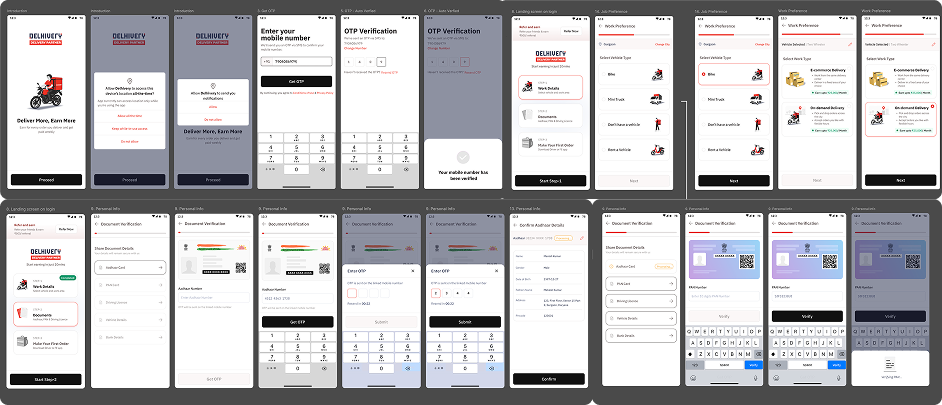
Self-Onboarding: Transitioned from manual
telecaller-based onboarding to self-serve digital
onboarding.
-
Interactive Flow: Created an interactive
onboarding journey from landing to final review.
-
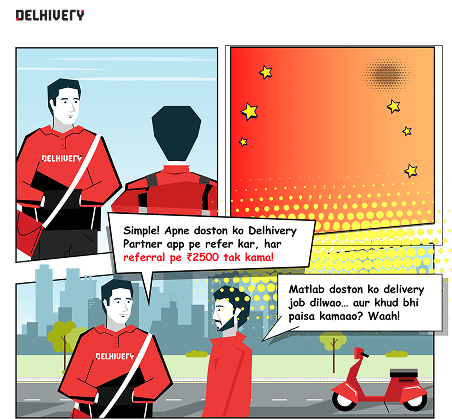
Referral Boost: Emphasized refer-and-earn
as a growth channel, empowering FEs to bring others
onboard.
-
Theme Update: Upgraded visual language
from blue to Delhivery’s black & red brand palette.
-
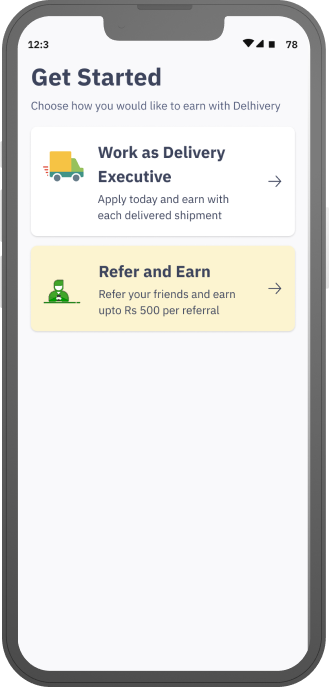
Referral Emphasis: Highlighted the
referral program with dedicated banners and first-step
CTAs.
-
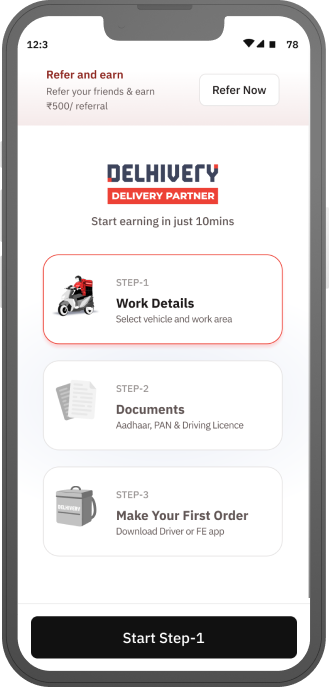
Step-by-Step Flow: Used a clear 3-step
visual: Work Details → Documents → First Order to guide
the flow.
-
Contextual Onboarding: Simplified the
first-step selection with transport type filters (bike,
van, etc.)
-
UI Simplification: Simplified screen
layout and spacing for clarity.
-
Progress Indicator: Added a progress
indicator to show onboarding stage.
-
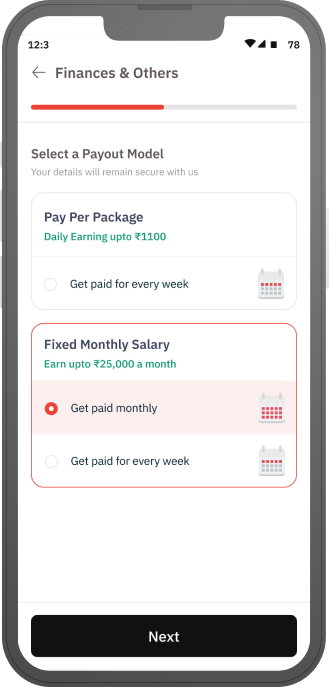
Iconography: Used icons and color-coded
options for payout preference (weekly/monthly).
-
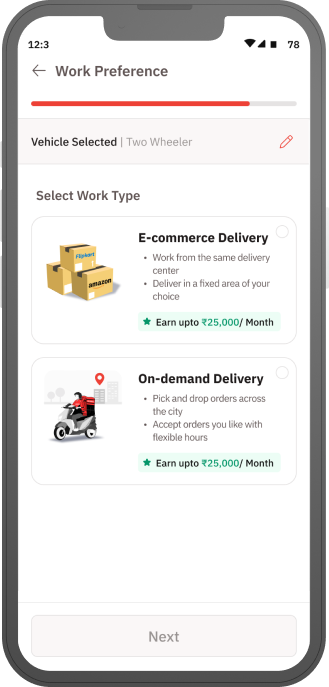
Icon-Based Input: Presented work type
choices using icons for quick visual recognition.
-
Section Grouping: Grouped relevant inputs
under meaningful sections.
-
Heuristic Alignment: Applied match
between system and real-world heuristic—made labels
intuitive and reduced cognitive effort.
-
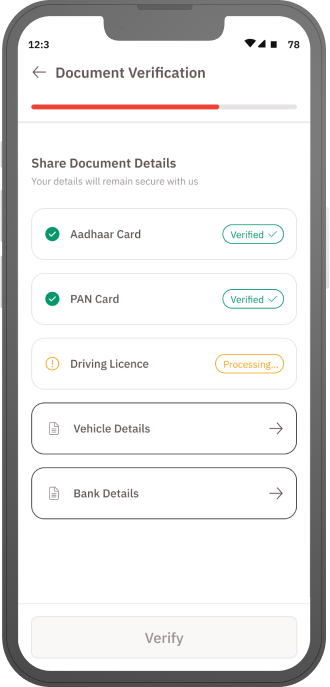
Visual Guidance: Improved layout by
pairing each form with a visual mock of the document
(e.g., Aadhaar, PAN).
-
Form Assistance: Used grayed-out
placeholders to guide accurate data entry.
-
Jargon Removal: Removed jargon, added
inline nudges, and ensured visual consistency with brand
guidelines.
-
Error Reduction: Applied recognition over
recall to reduce user error.
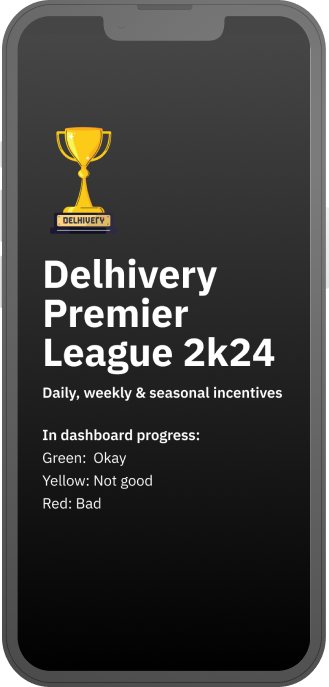
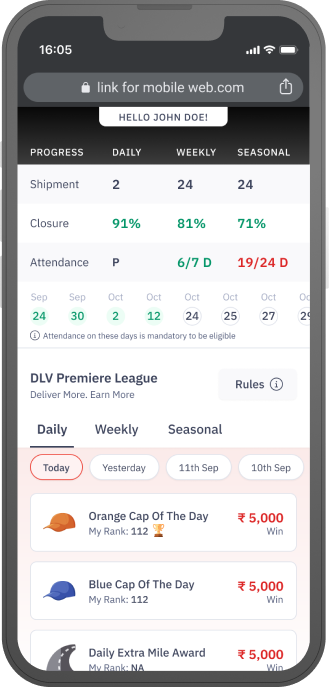
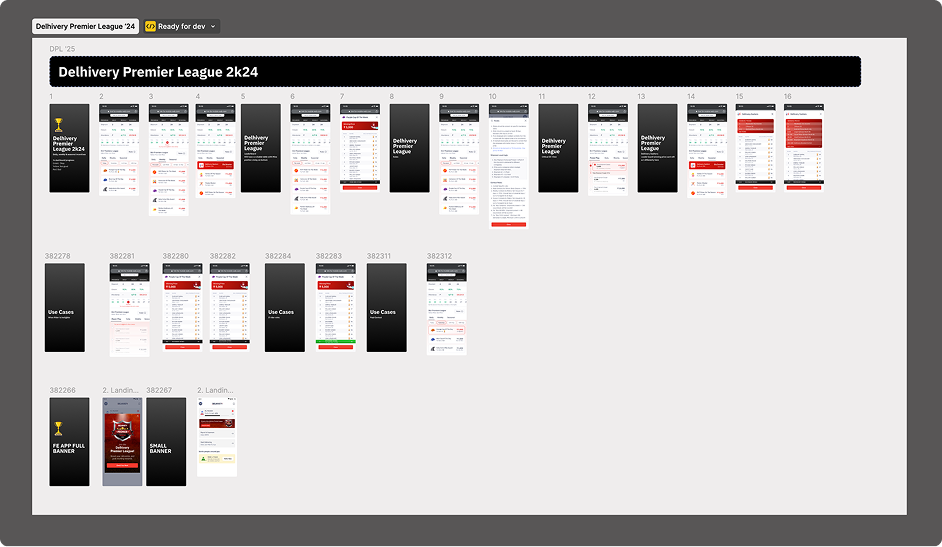
- Gamified FE performance tracking
- Reinforced brand identity with bold black/red theme
- Showcased milestones and top scorer badges upfront
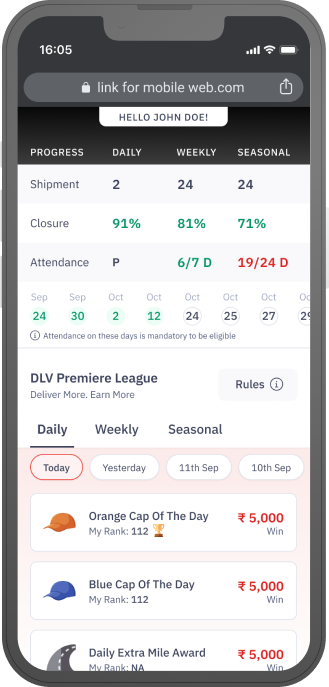
- Gamified FE performance tracking
- Reinforced brand identity with bold black/red theme
- Showcased milestones and top scorer badges upfront
-
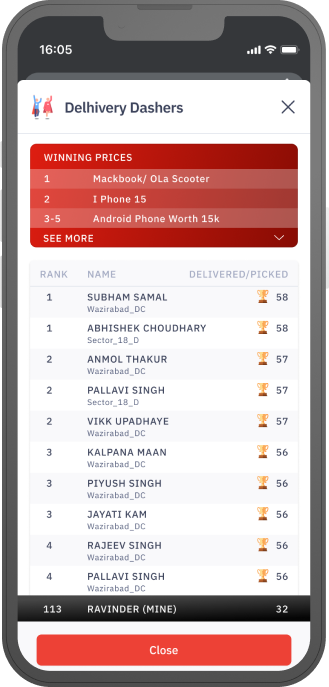
Gamified UX: Introduced a gamified
dashboard to track field performance.
-
Motivational Cues: Used badges, ranks,
and reward milestones to encourage engagement.
-
Hierarchy Design: Visual hierarchy built
around motivation: scores, achievements, and top-performer
visuals.
-
Brand Reinforcement: Reinforced
Delhivery’s bold black/red identity to match the theme.
-
Urgency Highlight: Highlighted top prizes
(MacBook, iPhone, Android phones) at the top for urgency.
-
Live Rank View: Floating personal rank
card allows real-time tracking without scrolling.
-
Motivation Driven: Designed to be both
motivational and functional—reinforcing gamification
goals.
Driving Design Where It Matters Most
Redesigning the Last Mile systems at Delhivery wasn’t just about updating screens - it was about bringing clarity, control, and confidence to the people moving millions of parcels every day.
Through on-ground immersion, collaborative design, and operational empathy, we simplified complex tools across field execution, digital payments, onboarding, and performance engagement. From FE task flows to partner onboarding and gamified motivation - we designed with speed, scale, and service in mind. This case study reflects how design, when grounded in real-world context, can improve not just usability but outcomes.
As a Design Lead, this project reminded me that great UX doesn't start in a Figma file—it starts in the field. Understanding people, working around constraints, and shipping what truly works at scale is where design leadership makes its mark.